The Tokamak Stability & Disruption Group focuses on understanding and mitigating plasma instabilities and disruption phenomena to ensure the safe and reliable operation of present and future tokamak devices. Our research addresses both macroscopic MHD stability and kinetic effects that critically influence disruption onset and evolution.
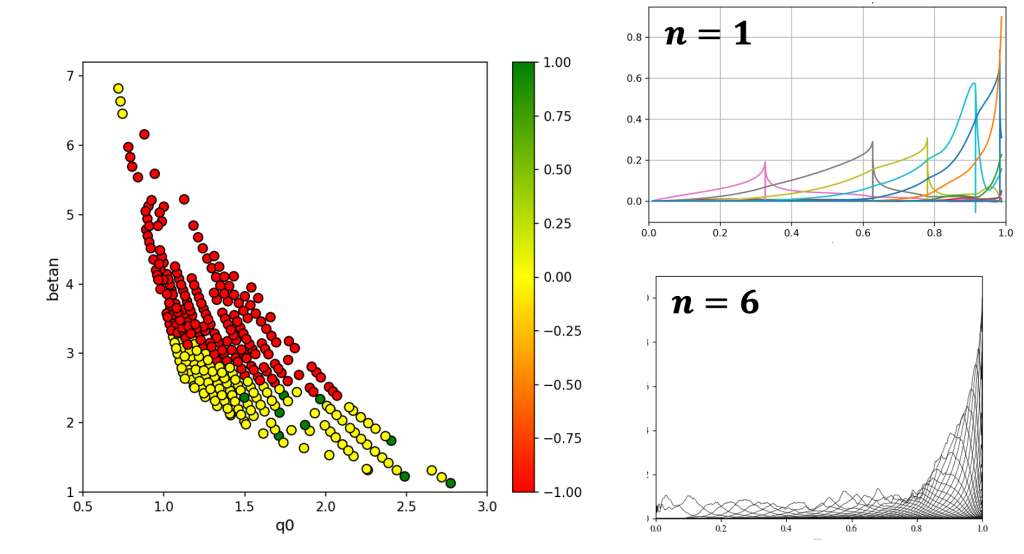
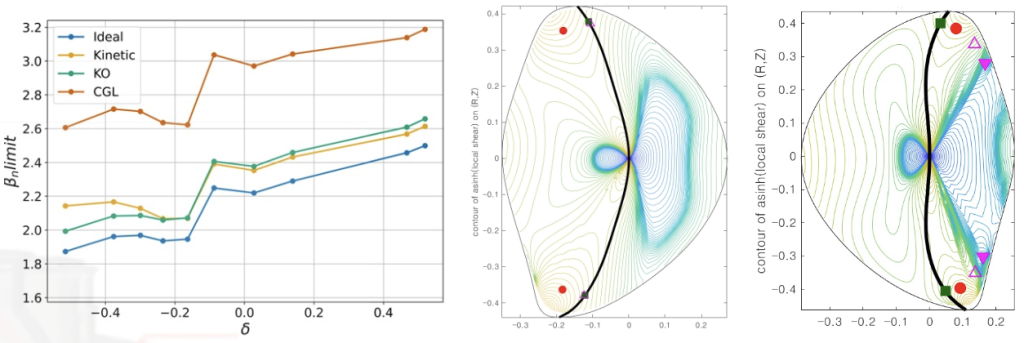
We perform comprehensive stability analyses of ideal MHD and tearing modes, with particular emphasis on their implications for device design and operational limits. In addition, we investigate kinetic stabilization mechanisms in advanced tokamak configurations, including positive and negative triangularity (PT/NT) plasmas, to identify pathways toward improved stability and performance.
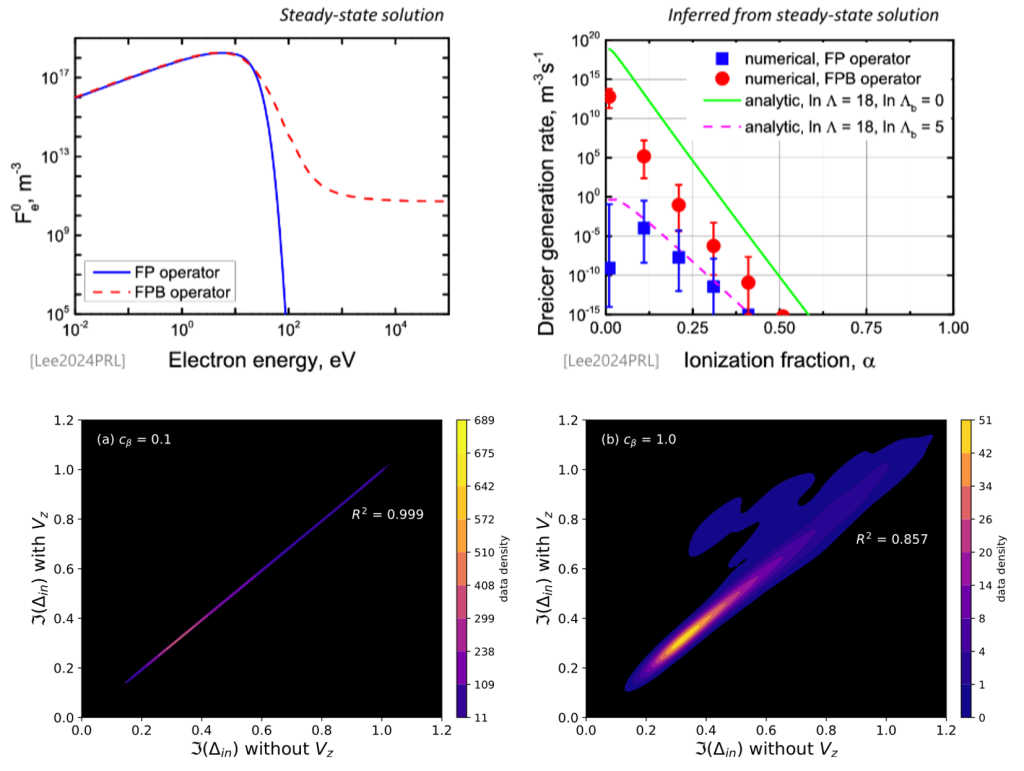
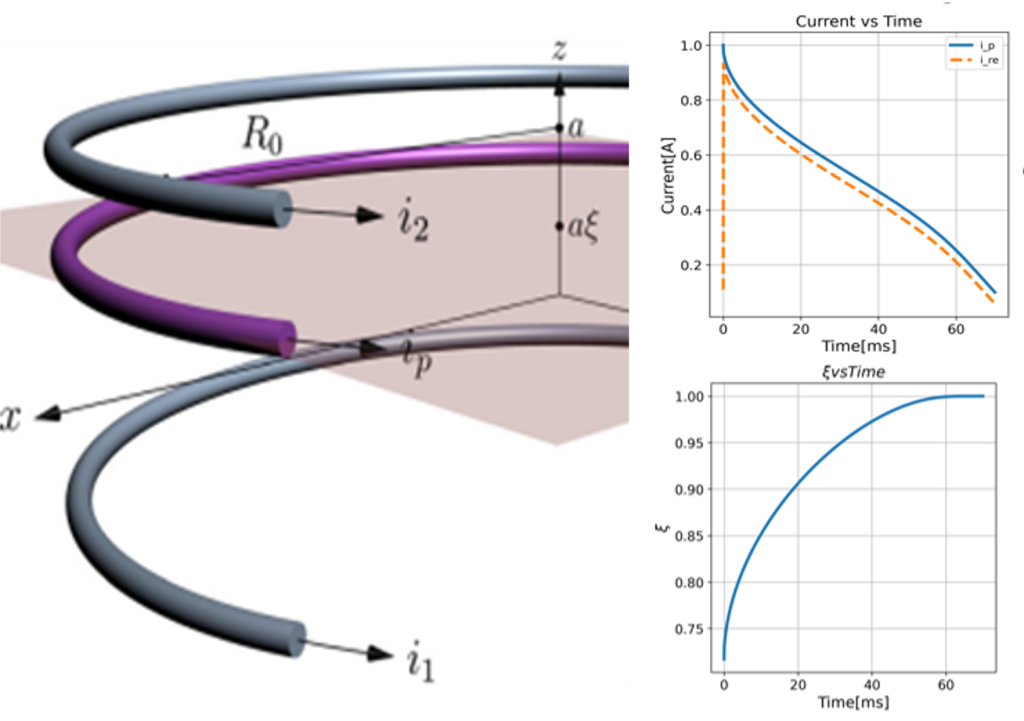
A major component of our work is the study of disruption physics, including the generation and dynamics of runaway electrons, the plasma response during vertical displacement events (VDEs), and the interaction with three-dimensional resonant magnetic structures. These efforts support the conceptual design of effective disruption mitigation strategies, combining physics modeling with simplified and reduced models.
MHD stability analysis for fusion device design
Runaway electron & 3D resonant layer response analysis
Kinetic stability analysis of PT(Positive Triangularity) & NT (Negative Triangularity) Tokamaks